SOFC and SOEC Technologies
High-Temperature Technology for Power Generation and Hydrogen Production
Ensuring Long-Term Performance and Reliability
The performance of modern fuel cell systems is largely determined by component quality, operating conditions, and the media used.
A comprehensive evaluation of materials, operating concepts, and environmental conditions helps to ensure long-term efficiency, performance, and service life.
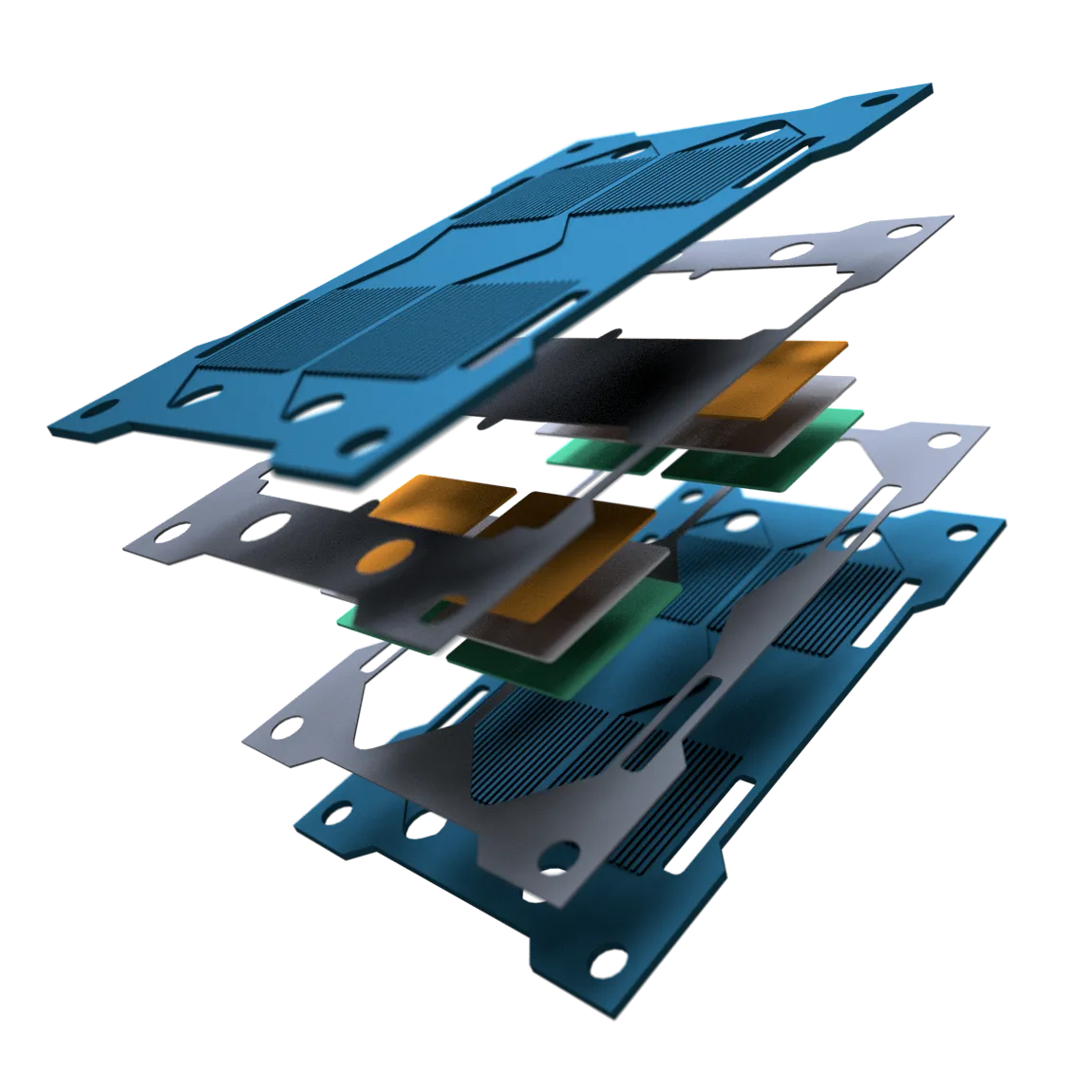
Structure of an SOFC
Development Challenges Across the Stack
The performance of an SOFC system is not determined by a single component. Rather, it results from the interaction of all components within the stack.
Typical areas of development include:
- Optimization of cell performance.
- Development of interconnector designs.
- Material and coating development.
- Improvement of sealing concepts.
- Thermal management.
- Media distribution.
- Long-term stability.
- Scaling to higher stack power outputs.
Depending on the development stage, the focus may be on individual components, subassemblies, or complete stacks.
Component Testing
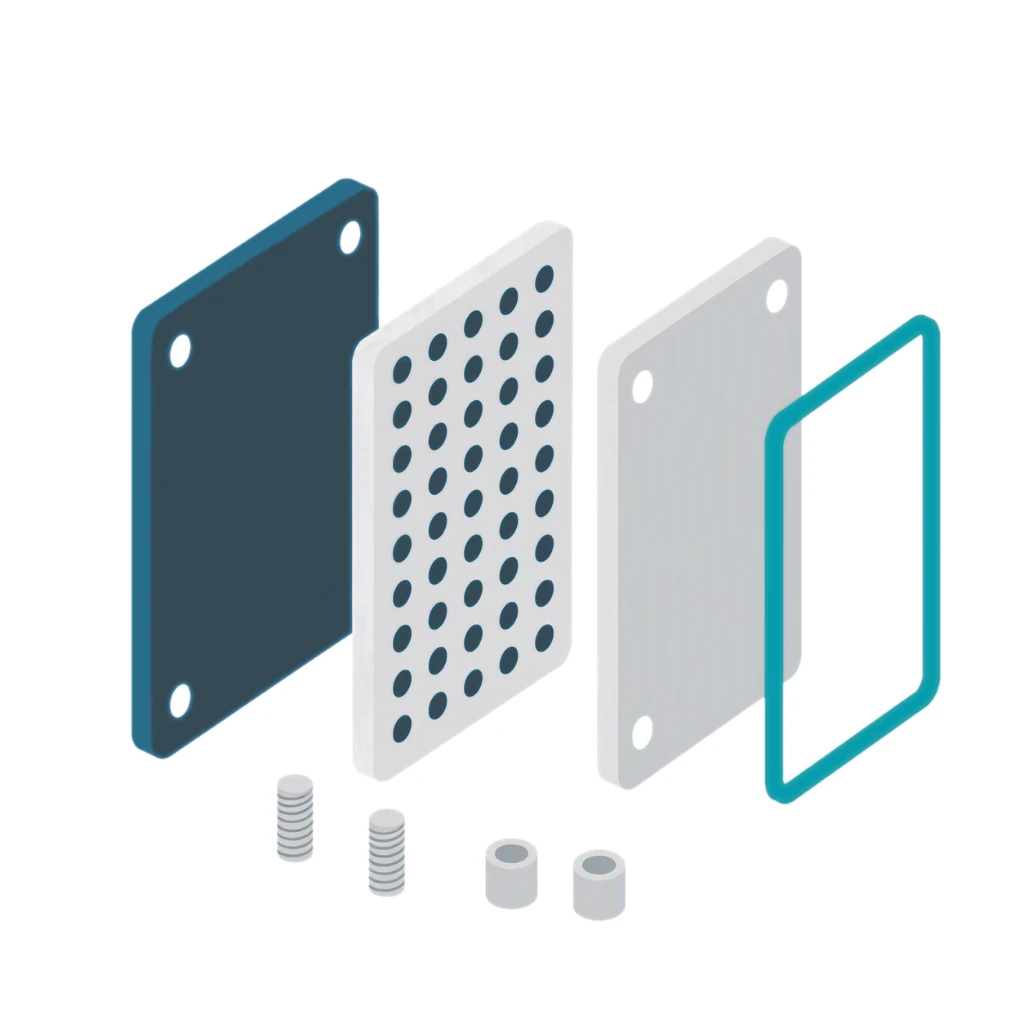
Individual components can be specifically evaluated to assess materials, geometries, or manufacturing processes.
Typical testing tasks include:
- Leakage testing
- Material testing
- Thermal stress testing
- Corrosion testing
- Mechanical load testing
Single-Cell Testing
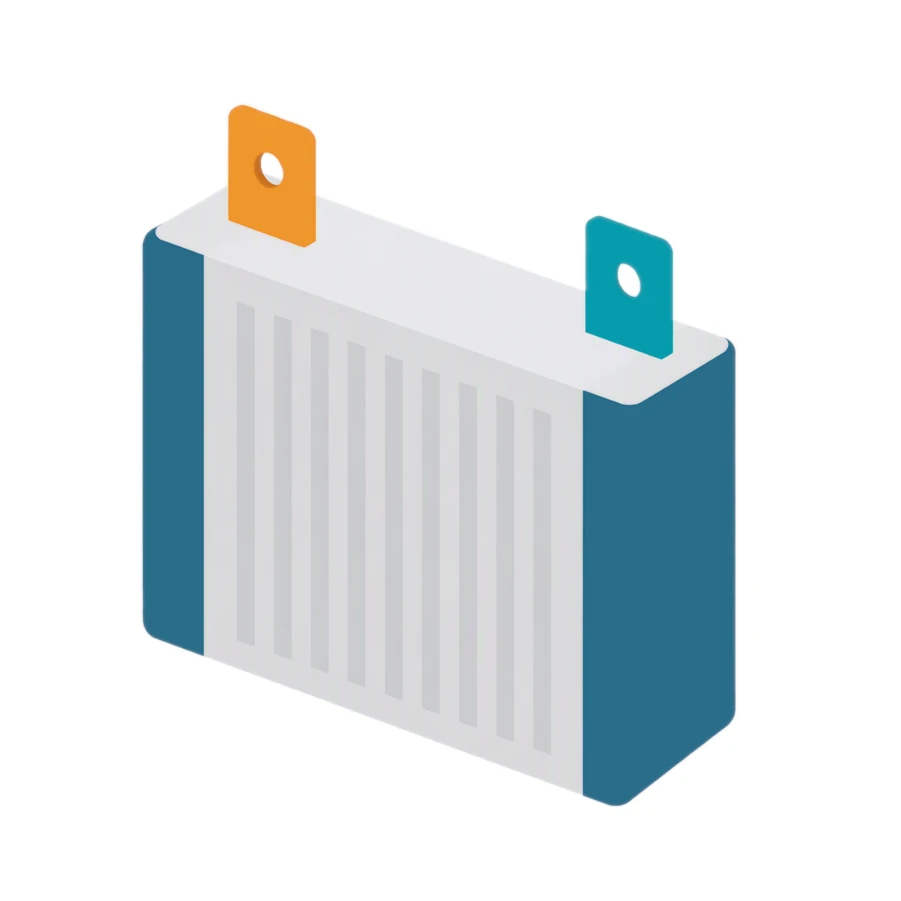
Single cells often represent the first step in evaluating new materials and cell concepts.
Typical investigations include:
- Current-voltage characteristics
- Power density
- Aging behavior
- Temperature dependence
- The influence of different process gases
Stack Testing
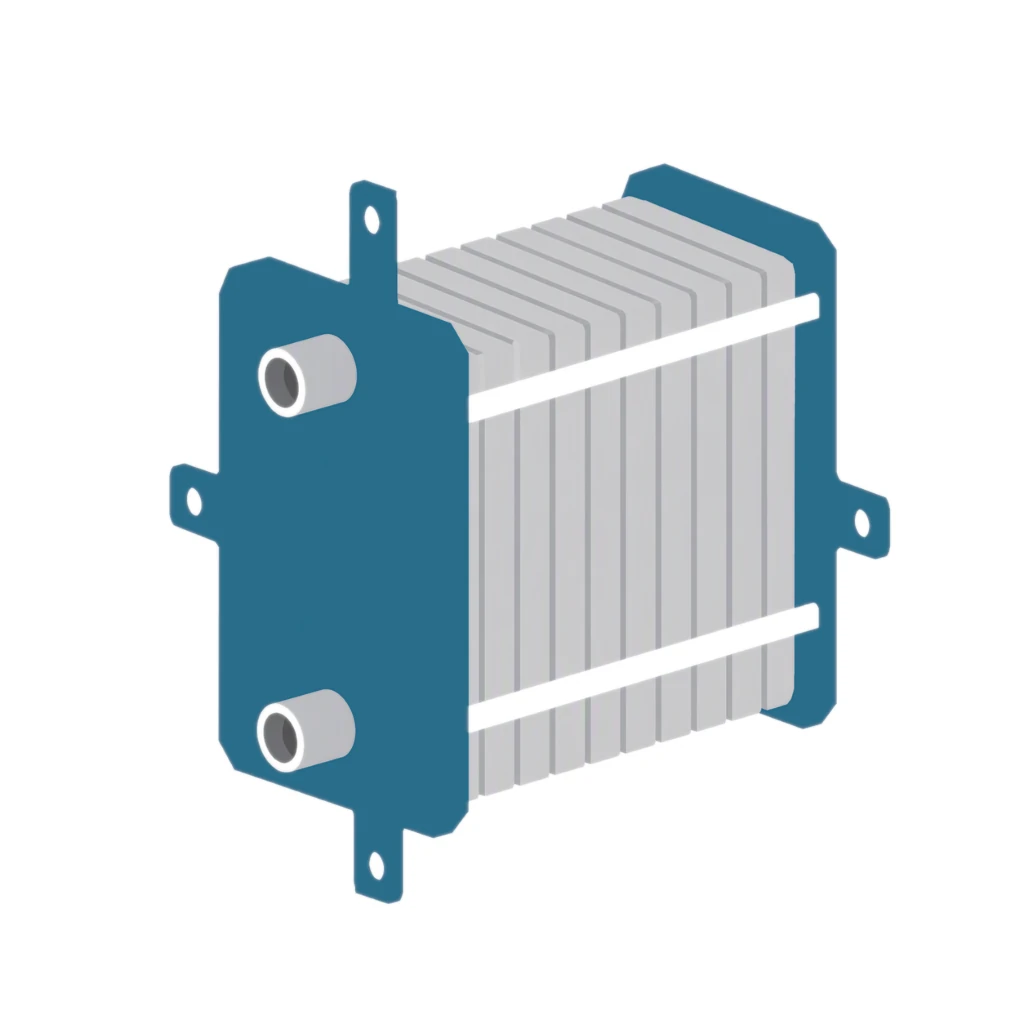
As the technology matures, the evaluation of complete stacks becomes increasingly important.
The following aspects are typically assessed:
- Overall system performance
- Cell homogeneity
- Temperature distribution
- Pressure losses
- Compression behavior
- Degradation over extended operating periods
System Testing
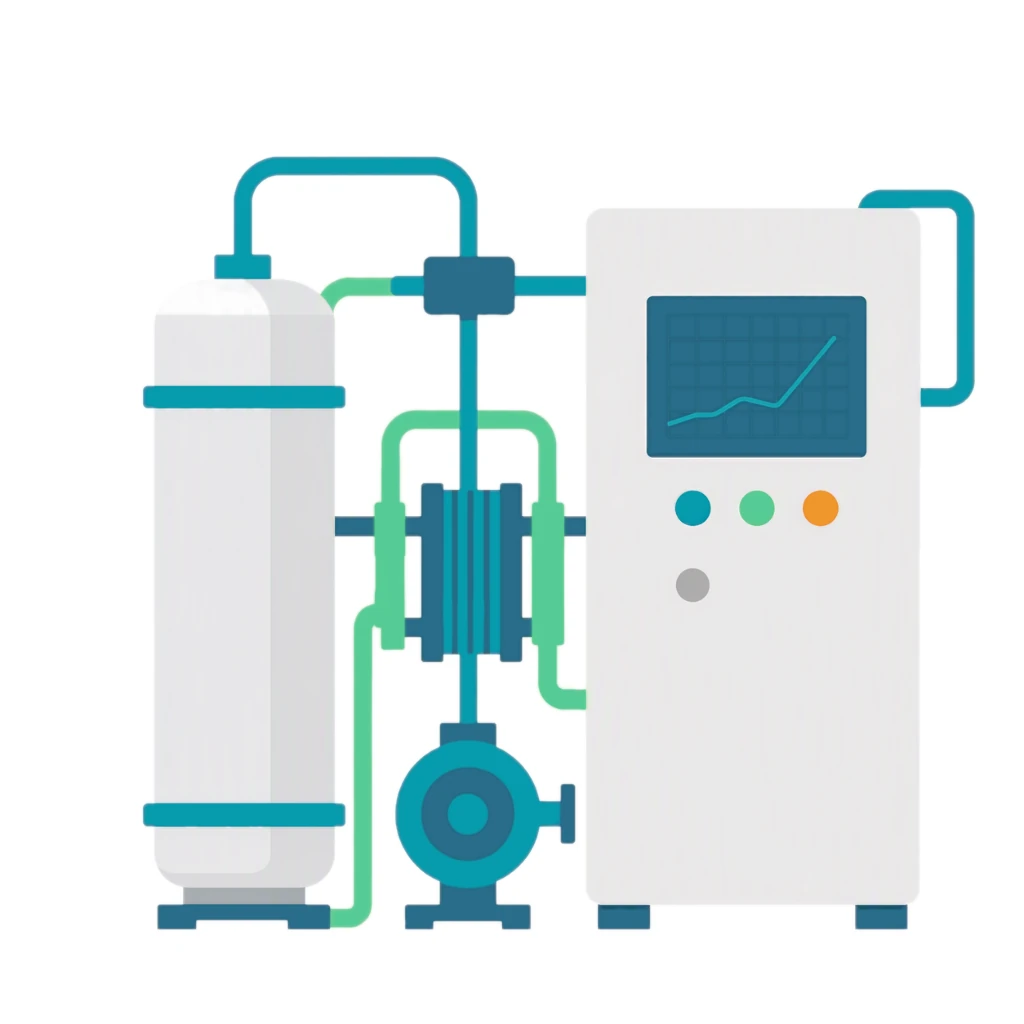
At the system level, additional components such as media supply systems, instrumentation, control systems, and safety equipment are integrated.
Key areas of focus include:
- Dynamic operating behavior
- Start-up and shutdown cycles
- Load changes
- Safety functions
- Long-term operation
- Automated test procedures
